
Smith County Civil Docket Searches
Smith County Odyssey is the starting point. Open the portal and pick Smart Search. If the date range is known, Search Hearings works well too. An exact cause number beats a name every time. Names repeat, and they can be entered in more than one form. When a party search is the only option, confirm the court, filing date, case type, role, and status before treating a result as a match.
The live Smith form runs on JavaScript, so treat field descriptions as general. Tyler's general guidance points to a case-number or party-name box. It also lists a location choice and Advanced Search filters. Not every filter may appear in the Smith County version today.
- Decide whether the matter belongs in district, statutory county, justice, or probate court.
- Search Odyssey by exact cause number, or use the party name carefully.
- Compare the result's court, case type, filing date, and party role.
- Read entries for pleadings, motions, orders, and the next setting.
- Confirm the setting and request any needed document from the proper clerk.
Concurrent Civil Jurisdiction
The Courts at Law here are not small-dollar-only courts. Smith County's combined judges material states that their civil jurisdiction runs concurrent with the District Courts. Amount alone is a weak guide. The assignment shown on the case controls.
| Court level | Civil work | Primary record route |
|---|---|---|
| District Courts | General civil, family, divorce | District Clerk and Odyssey |
| Courts at Law | Civil, family, appeals, probate assignments | County Clerk and Odyssey |
| Justice Courts | Civil claims up to $20,000 | Assigned precinct clerk |
| CCL3 probate function | Probate and guardianship | County Clerk Probate Division |
Appeals from a justice case go to a Court at Law. When that happens, track the new court and cause number rather than assuming the first precinct still holds the record.
Civil Dockets: What They Show
A civil docket is a register of events. It proves a filing happened, not what the paper says. Whether images open depends on case type, access limits, and the clerk's system.
| Cause number | The identifier used by the court and clerk. |
|---|---|
| Parties and roles | Plaintiff, defendant, petitioner, respondent, or another role. |
| Case type | The court's classification of the dispute. |
| Filings | Dated entries for petitions, answers, motions, and notices. |
| Settings | Hearings, trials, status conferences, or other events. |
| Orders and outcome | Rulings, dismissal, judgment, or another final status. |
Use the docket to name the exact filed item. If the text of that item matters, ask the clerk for a plain or certified copy.
Five Assigned District Courts
Five district courts sit in Smith County: the 7th, 114th, 241st, 321st, and 475th. Each court's own page lists assignments, rooms, calendars, and standing-order links. The 321st sits on the fifth floor of the Courthouse Annex. The other listed district rooms are in the courthouse. For that court's assignments, calendar, and standing-order links, the 114th District Court page posts the current details.
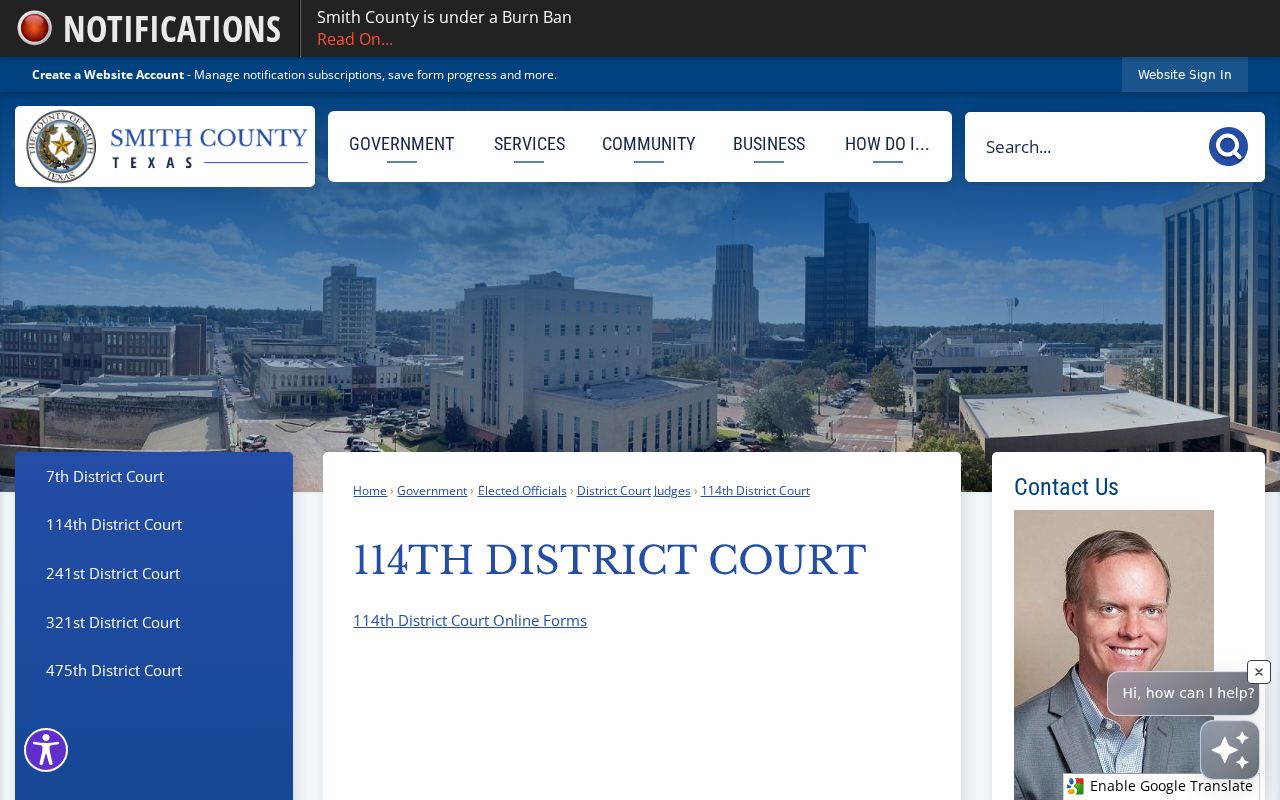
After Odyssey shows the assignment, the court page confirms venue and location. The 321st District Court page gives its Annex location and standing-order links.
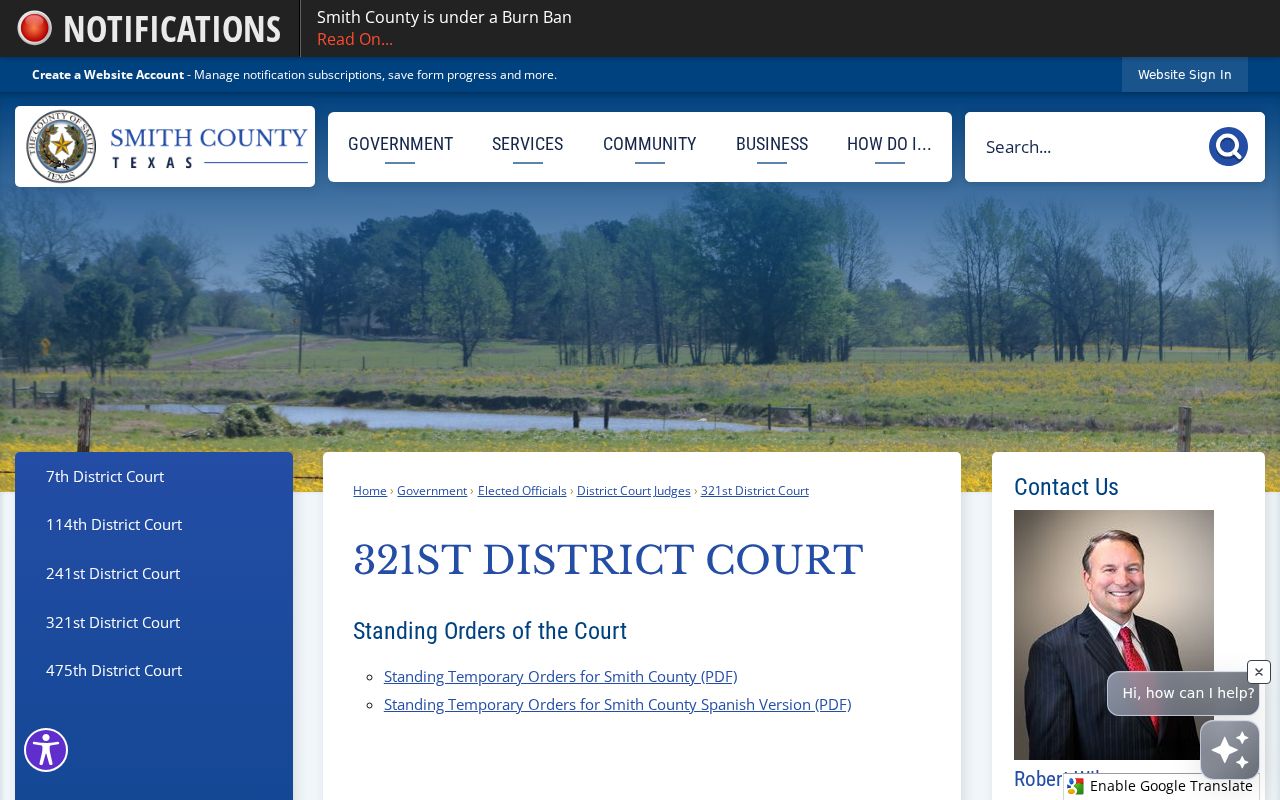
That split matters. Reading only "Smith County court" on a docket result can send you to the wrong building, so note the assigned court before you go.
What Cases Fill the Civil Docket
Civil dockets in Smith County carry contract, debt, tort, property, family, divorce, probate, guardianship, and justice-court claims. Access varies by case. Family matters may show public event data while protected personal information or documents stay restricted.
- District civil disputes and divorce proceedings kept by the District Clerk
- Civil and family matters assigned to a Court at Law
- Justice-court civil claims within the $20,000 jurisdiction stated by the county
- Probate and guardianship matters assigned through Court at Law 3
- Appeals that move from justice or municipal court to a Court at Law
Match the record route to the actual court assignment. The County Clerk's official recording portal searches grantor, grantee, subdivision, and document-number fields. Those land-record terms do not make it a lawsuit search.
Smith County Local Civil Rules
Smith County's civil trials run under local rules. Those rules shape scheduling, trial preparation, and filing practice across the relevant District Courts and Courts at Law. A case-specific order still controls over a general rule. The Local Rules of Civil Trial page links the current rule set those courts use.
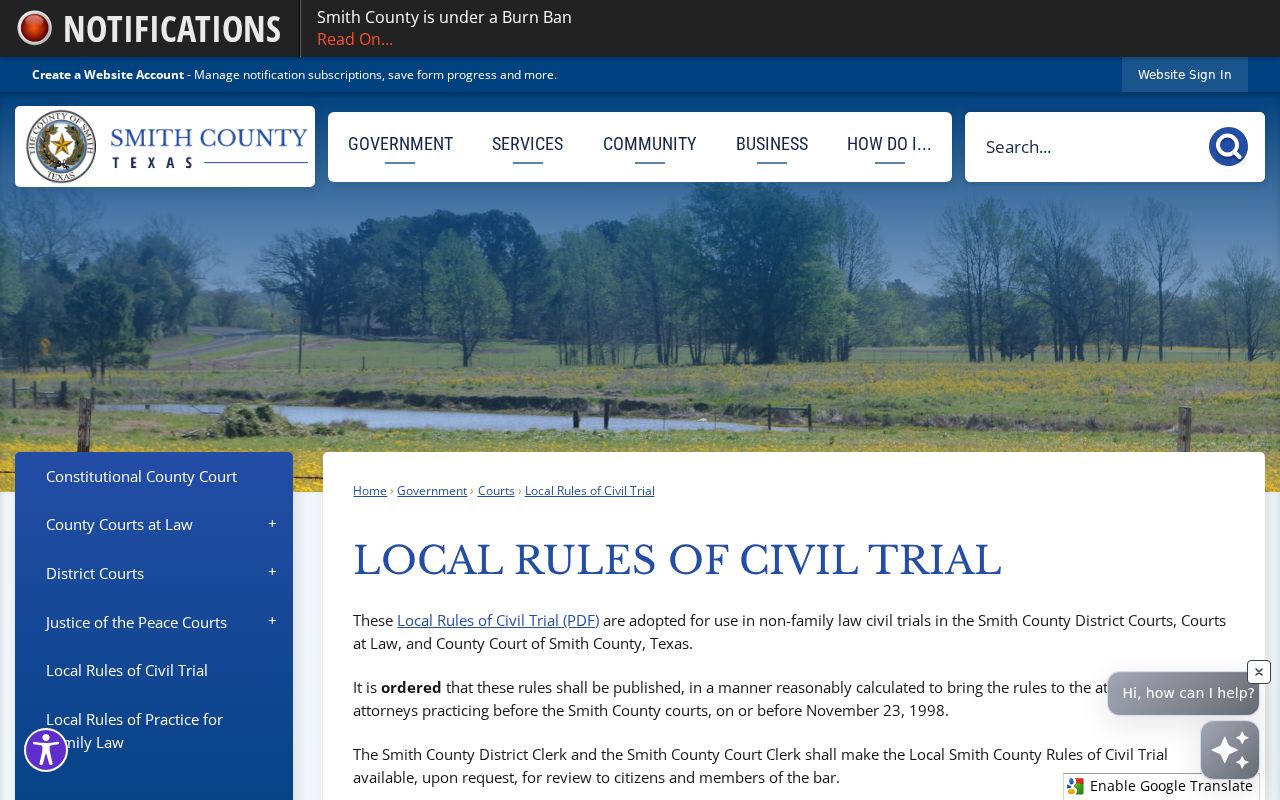
A civil docket must be read alongside the assigned court's orders and current rule set. Family cases follow different rules. Clerk staff can explain court services and procedure. But they cannot give legal advice or tell a party what to file.
Family law keeps its own local rules page, separate from the general civil rules. That separation matters.
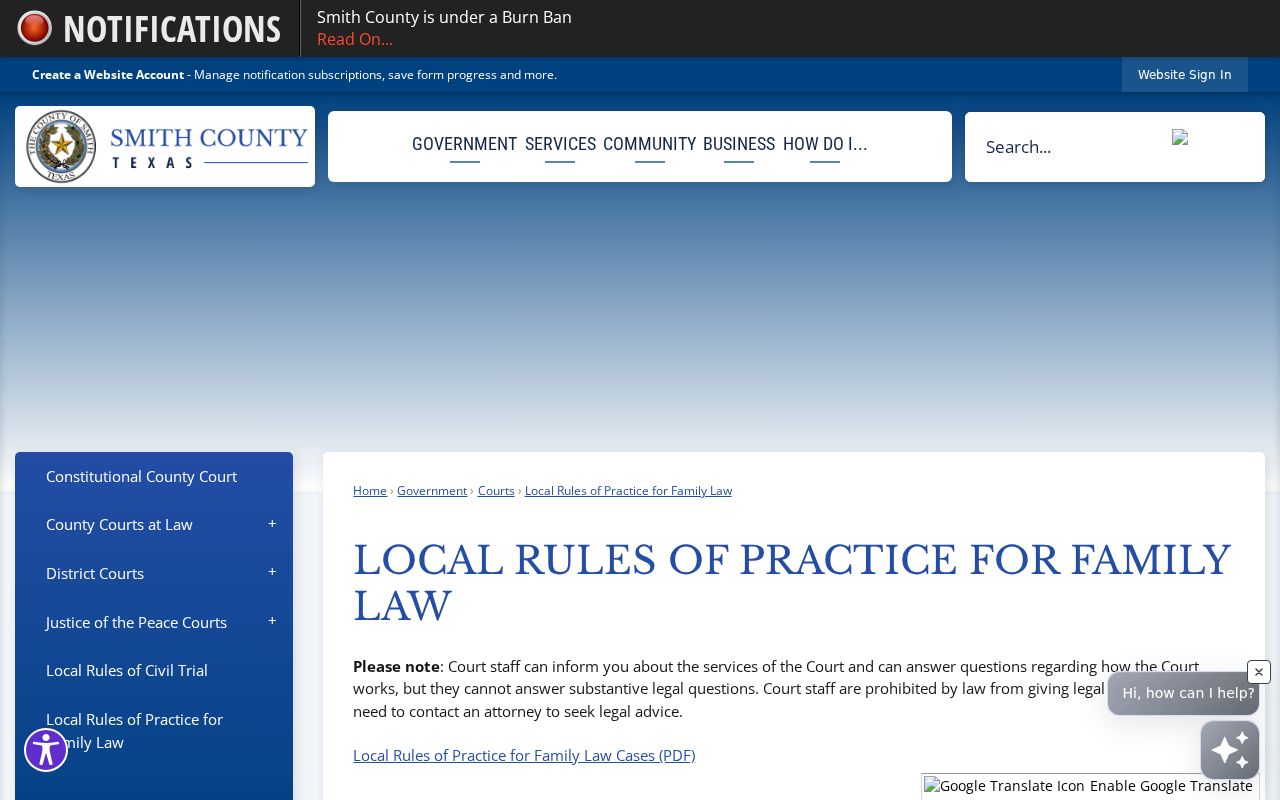
A separate rule page keeps family procedure from being blurred into other civil case types.
Hearings on the Civil Docket
A setting entry lists a date, time, court, event type, and judicial officer or location. It might be a hearing, trial, or status conference. A setting is not a judgment. Dates can also move after the docket entry first appears.
Court at Law 2 tells parties to verify civil and family settings. It points them to Judicial Records Search. Court at Law 3 posts docket lists. It points readers back to the live judicial records. Compare what you see with the Smith County court schedule. If a notice and the portal disagree, call the assigned court.
Conflicting dates: Keep the notice, note when the portal was checked, and contact the assigned court. Do not choose the more convenient date.
Probate Index Versus Images
Probate access in Smith County shows a common limit. The index is online. Probate images are viewed through the clerk's office. The Probate Division sits at the Courthouse Annex, 200 E Ferguson, and its published phone is 903-590-4677. In-office access runs weekdays from 8 a.m. to 5 p.m.
Ask for the exact probate case, document, and date. An index hit proves only that an item exists; it does not supply the filed image or a certified copy. Will safekeeping is listed separately and is not public.
Court at Law 3 handles the probate and guardianship function. Uncontested probate and guardianship matters may use the Annex first-floor location, so check the current notice before traveling.
Certified Civil Order Requests
Check the District Clerk's copy schedule before you order. Emailed regular copies run $1 per page for documents of 0 to 15 pages, and $15 per document at 16 pages or more. Paper or certified copies cost $1 per page. Since these terms can change, confirm them with the office first.
- Record the cause number and full court name from the civil docket.
- Name the exact petition, order, judgment, or other filed item.
- State whether a plain, emailed, or certified copy is needed.
- Ask the clerk to confirm the current charge and delivery method.
- Keep the receipt and compare the returned copy to the docket entry.
Know which clerk you need before you go. The District Clerk sits at 100 N Broadway, Room 204, Tyler, and answers 903-590-1660. County Clerk civil matters are handled at the Annex, Suite 300, with a direct civil line at 903-590-4673. Not every civil request goes to the same counter.
Who Can See Civil Dockets
Most civil docket entries in Smith County are open to anyone. A law, rule, or court order can still restrict them. Sealed material, protected family information, and sensitive identifiers may be missing or redacted. And a no-hit result does not always mean secrecy. The wrong court, a delayed index, or a portal outage can all cause it.
Access routes: Texas Rule of Judicial Administration 12 governs judicial administrative records. The Texas Judicial Branch policy explains the court-record distinction. Smith County's public-information page directs clerk and judicial requests to the proper custodian.
The Texas Public Information Act will not replace the clerk's case-copy process. First figure out what you want: a docket entry, a filed pleading, a court order, or an administrative judicial record. Then ask the office that keeps it.