
Smith County Court Record Requests
A good request names both the case and the product you want. Smith County splits record-keeping among several custodians. District Court work sits with one clerk. County Court matters sit with another. Judicial administrative records follow their own path. You may lack a cause number or court assignment. In that case, the Smith County Odyssey portal is the place to start. Smart Search works by case, and Search Hearings works by date. Remember that a result is only a locator, not a certified court record.
From there, ask the clerk who holds that court's file. The District Clerk keeps felony and divorce records along with other district proceedings. The County Clerk serves County Court, including its Criminal Misdemeanor and Probate divisions. Smith County accepts phone, email, mail, and counter requests. Each office sets its own delivery rules.
- Identify the court, cause number, parties, and filing date when known.
- Name the exact docket, pleading, order, judgment, or certified copy.
- Contact the correct clerk by phone, email, mail, or in person.
- Ask for a cost estimate and confirm payment and delivery.
- Check the received record for the requested certification or file stamp.
Smith County Clerk Routes
The District Clerk sits at 100 North Broadway Avenue, Room 204, Tyler, Texas 75702. Call 903-590-1660. Published hours are weekdays, 8 a.m. to 5 p.m. This office holds records from the 7th, 114th, 241st, 321st, and 475th District Courts.
The County Clerk organizes its counters by record type and floor. Misdemeanor, civil, and probate service runs through the Courthouse Annex. It sits at 200 East Ferguson Street in Tyler. Recording is a separate counter. The Official Public Records portal indexes land and recording documents only, not the Smith County judicial docket.
Smith County District Clerk
100 N Broadway Ave, Room 204
Tyler, TX 75702
903-590-1660
County Clerk Misdemeanor
200 E Ferguson St, Third Floor
Tyler, TX 75702
903-590-4680
Kinds of Smith County Records
A Smith County court record can mean a one-line register or a full case file. The difference matters. The docket lists events in order. Pleadings show what the parties filed. Orders and judgments carry the court's signed action, which is what most people actually need. Exhibits, service returns, notices, and reporter transcripts may sit with separate holders or carry access limits. Name the layer you want. That way a search result is not mistaken for the document behind it.
- Docket entries showing filings, settings, and rulings
- Petitions, answers, motions, and related pleadings
- Signed orders, judgments, and disposition documents
- Notices, citations, and returns of service
- Exhibits and court-reporter transcripts when public
- Plain, certified, or electronically delivered copies
Probate shows how this works. Smith County posts probate indexes online, yet its official page says images must be viewed at the clerk's office. A searchable name does not mean every filed image is open on the web.
Smith Probate Images Stay Offline
The Smith County Probate page provides an online index. Image viewing stays inside the County Clerk's office. A probate deputy clerk can route copy requests to the right spot. Court at Law No. 3 handles probate and guardianship. So do not send a probate search to the land-record portal just because both services live under the County Clerk.
Be specific about what you want: a public filing, an order, or an index entry. Wills held for safekeeping are not public. The published $5 safekeeping charge does not change that. Contested matters and confidential material may call for a narrower request or a redacted copy.
Note: An online probate index confirms an entry. It does not grant public web access to the filed image.
Smith County Records: What They Contain
What a Smith County record contains depends on what was filed and what stays public. A court docket is a chronological outline. A complete case file may hold documents. Some of them require a clerk request. Read each field as a record of an event, nothing more.
| Cause Number | The clerk identifier used to match the assigned court and file. |
|---|---|
| Parties and Roles | Public names and procedural roles, subject to restriction. |
| Docket Entries | Dates and short text for filings, settings, orders, and disposition events. |
| Pleadings | Petitions, complaints, answers, motions, and related papers. |
| Orders and Judgments | Signed court action when public and in the requested file. |
| Service and Notices | Citations, returns, notices, or proof of a procedural step. |
A transcript is not the same thing as a clerk docket. Reporter records may need a separate order process. An exhibit can be restricted or missing from the portal even when its filing event appears on the docket.
Smith Copies: Plain or Certified
A plain copy just reproduces a document. A certified copy carries the clerk's formal assurance. The clerk vouches that it is a true copy from the file. Which one you need depends on where it is going. Ask the receiving office what form it requires. The clerk can explain its products but cannot decide what another agency accepts.
Give the clerk the court and cause number. Add the exact instrument, filing date, certification need, and delivery method. If all you have is a name, say so and ask for a search first. And never assume the County Clerk's misdemeanor search charge covers certification.
Request wording: Ask for the exact filed order or judgment by cause number and date, then state whether a plain or certified copy is needed.
Copy Fees and Certification
Smith County sets charges by office and delivery format. The District Clerk prices emailed regular copies at $1 per page through 15 pages, then $15 per document at 16 or more pages. Paper and certified copies run $1 per page. Confirm the current schedule and ask whether service or certification changes the total.
| Smith County service | Published amount |
|---|---|
| District Clerk email copy, 1 to 15 pages | $1 per page |
| District Clerk email copy, 16 or more pages | $15 per document |
| District Clerk paper or certified copy | $1 per page |
| County Clerk misdemeanor search | $5 per search |
| County Clerk misdemeanor print | $1 per page |
The misdemeanor FAQ was updated August 21, 2025. Its search can surface a cause number, court assignment, date, attorney, or bondsman. It is still a search product, not automatic certification.
JustFOIA Is a Different Route
Chapter 552 governs the county's public-information channel, and Smith County runs those requests through JustFOIA. That portal fits county-government records. It does not override how the clerk handles a court case file. Judicial records move along a separate path, as the county's own Public Information page explains.
The official Smith County request portal displays the general channel a requester actually uses.
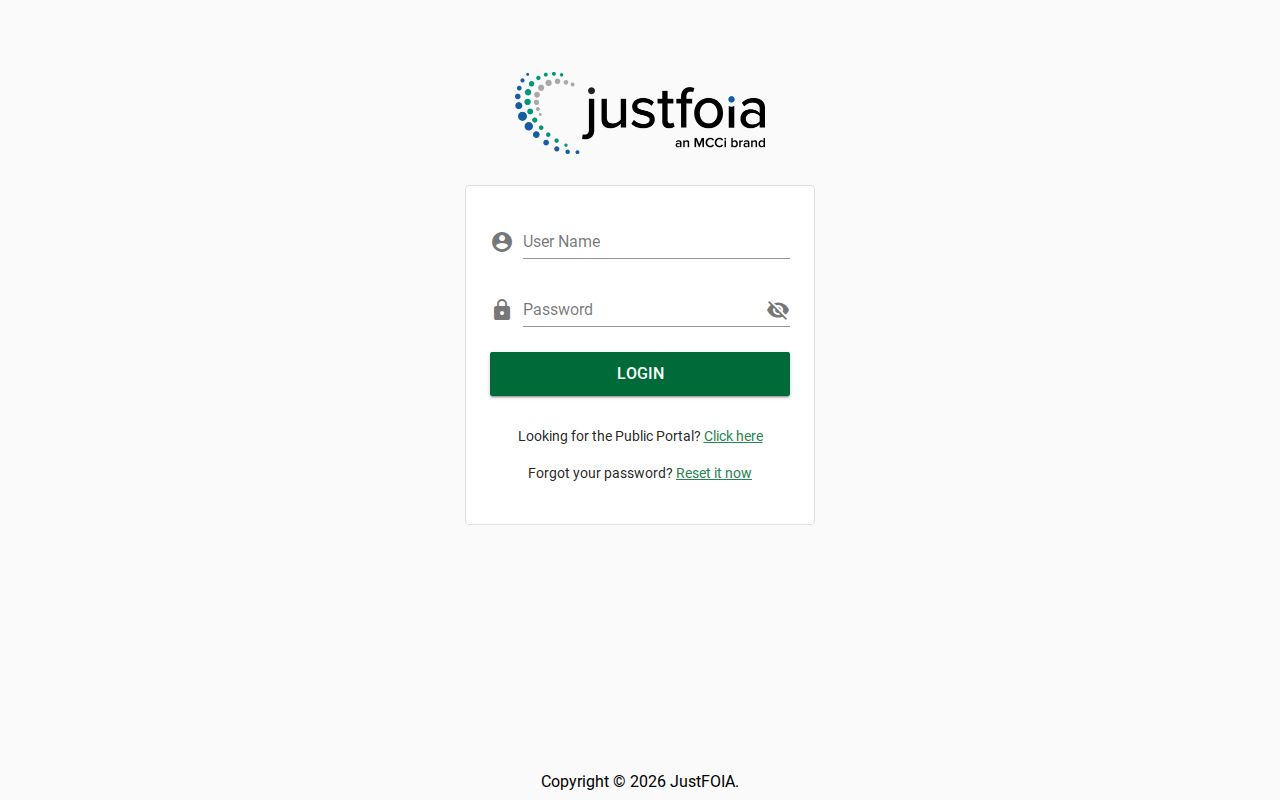
This separate intake is why the right custodian must be picked before a Smith County record request goes out.
Access Rules for Court Records
Texas draws a line inside its records system. Some judicial records fall under ordinary open-government requests; others do not. Rule 12 covers judicial records made or kept in the regular course of judicial business, while filed case documents answer to statutes, court orders, confidentiality rules, and clerk process instead.
The county's Public Information page lays out that boundary between the PIA and Rule 12 for Smith County requesters.
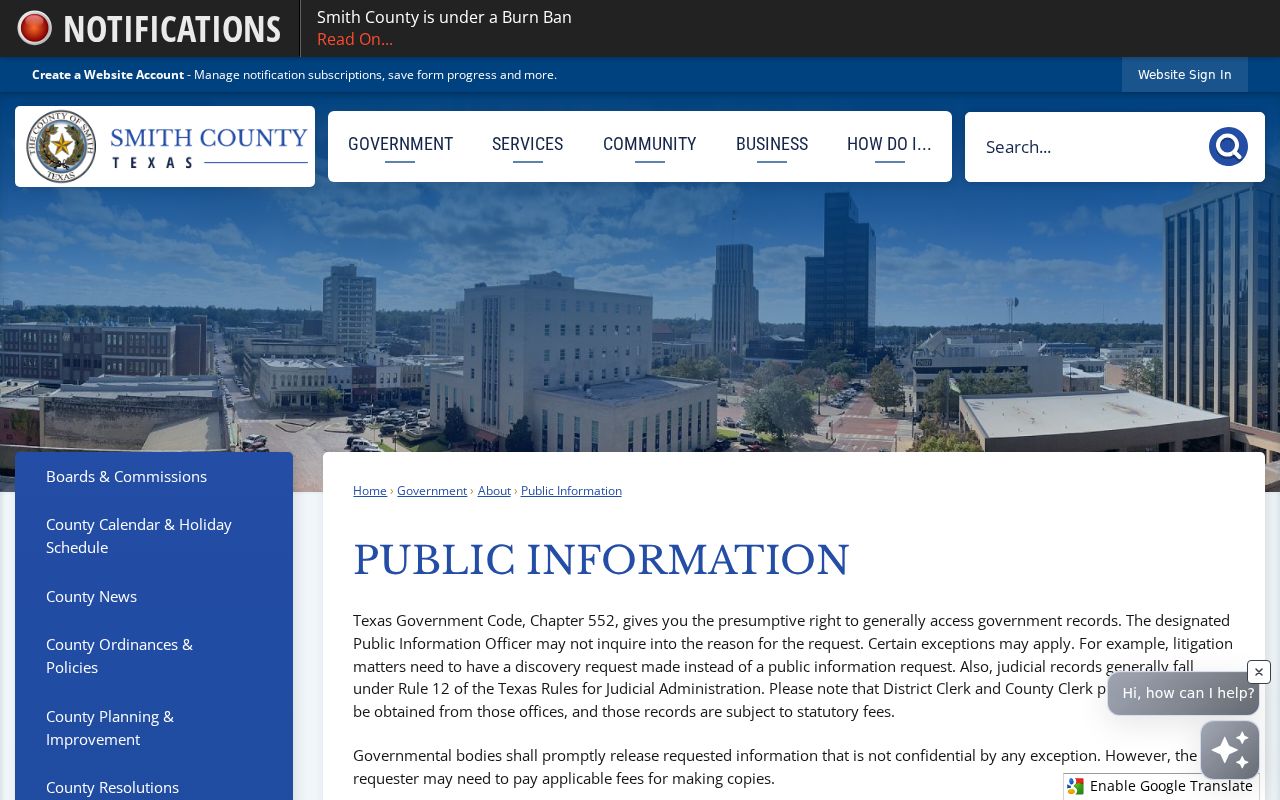
The county's own access page spells out why a Smith County records request may go to a Rule 12 custodian rather than through Chapter 552 intake. It is worth reading before you file.
Key access rules:
Texas Judicial Branch policy explains why ordinary PIA treatment does not govern courts in the same way.
Texas Rule 12 sets request, cost, exemption, denial, and appeal rules for judicial records.
Texas Government Code Chapter 552 governs public information held by covered bodies.
Restricted Smith County Records
A blank Odyssey result does not mean the record is gone. The cause may be sealed, confidential, redacted, or simply not indexed yet. It may sit in another court entirely. Juvenile files, protected family details, expunction and nondisclosure cases, wills held for safekeeping, and anything under a sealing order can be limited or missing from public view in the Smith County system.
Check your spelling first. Then confirm the cause number, the court, and the filing period. Ask the right clerk whether a public index entry, a redacted copy, or a particular public order exists for that case number. If a Rule 12 request for judicial administrative material is denied, the denial should state its reason. It should also give the appeal path. Clerks can explain the procedure, but they cannot advise you on how to lift a restriction.
Note: A blank result can point to the wrong court or an access limit. Confirm it with the custodian before assuming anything.